Skip to product information
1 of 6

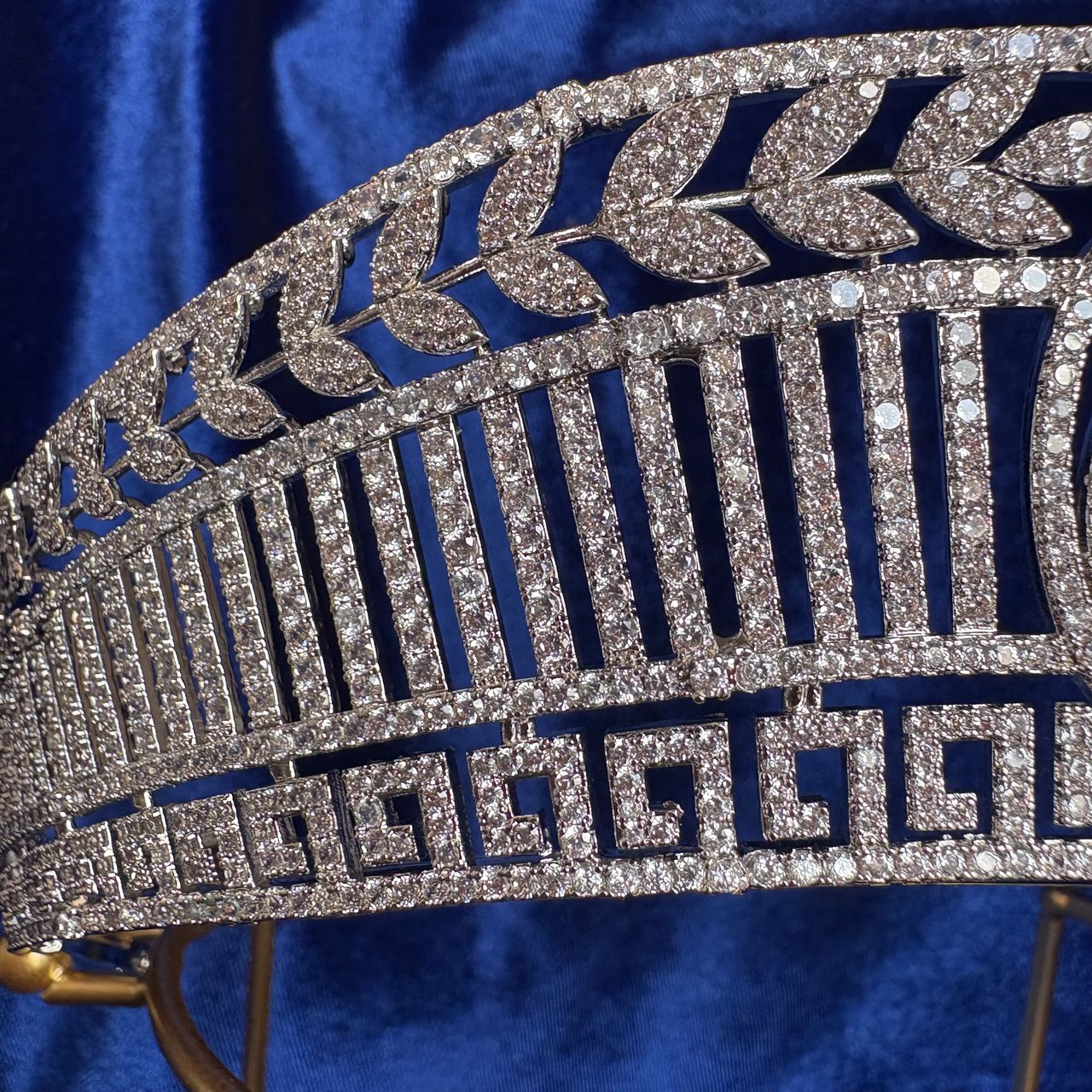
Prussian Diamond Tiara Replica

Prussian Diamond Tiara Replica

Regular price $220.00 USD
Regular price Sale price $220.00 USD
Sale Sold out
Buy on Etsy
World’s most secure checkout via Etsy
  • MADE TO ORDER
  • Handcrafted with excellent craftsmanship & finest materials

Size & Material

1

Shipping

⦁ Ship with UPS (Tracking Code Included)
⦁ Secure Packaging - Double-Walled E-Commerce Box, Bubble Wrap, and Fragile Sticker
⦁ If the package is lost during shipping, I offer a FULL REFUND or a NEW ITEM (your choice) (If the tracking code shows no delivery)
⦁ GLOBAL SHIPPING Available
⦁ Express Shipping Available (Please contact before ordering)

Comes With

⦁ U-shaped bobby pins
⦁ Cleaning Cloth
⦁ Thank You Card
⦁ Silica Gel

All Details

⦁ AAA+ Ultra Reflective, Ultra Clear Diamond-Cut Premium American Diamond (CZ)
⦁ Diamond Like Extremely Shiny Finish
⦁ Crafted to perfection, this piece captures and reflects light flawlessly – whether under natural sunlight or artificial lighting. It photographs beautifully, showcasing its radiant brilliance every time.
⦁ Real Platinum Coating – up to 5–10 times more tarnish-resistant than 925 sterling silver
⦁ Handmade -Excellent Craftsmanship
⦁ Produced with a great respect for your biggest day
⦁ Exactly as Pictured
⦁ Micropavé Technique – Securely set stones that stay in place
⦁ Two Loops on Each End – Easily attach with bobby pins for a secure hold
⦁ Damage-Resistant Flexibility – Made with a special alloy blend that offers ideal strength.
⦁ Veil-Friendly Design – Can be worn with or without a veil
⦁ Hassle-Free Returns – Easy refund and return process

View full details

History of The Orijinal Royal Jewel

Read The Story Behind The Sparkle

The Prussian Diamond Tiara

The narrative of the Prussian Diamond Tiara is a significant chronicle of European dynastic interconnectedness, moving across four nations and three sovereign houses before its establishment in the Spanish royal archives. Unlike many grand diadems that remain confined to a single national treasury, this piece has transitioned from the imperial court in Berlin to the royal palaces of Madrid, serving as a primary bridal heirloom for several generations. The ornament's history originates in 1913, during the final years of the German Empire, when it was commissioned by Kaiser Wilhelm II. The Emperor engaged the Berlin court jeweler, Koch, to produce the piece as a nuptial gift for his daughter, Princess Victoria Louise of Prussia, upon her marriage into the House of Hanover.

Neoclassical Design and Structure

The architecture of the diadem is a definitive expression of Neoclassical elegance, adhering to the "Empire" aesthetic that persisted into the early 20th century. Constructed from platinum and encrusted with high-quality diamonds, the tiara possesses a relatively compact stature, functioning as a structured bandeau rather than a monumental crown. Its configuration is organized around two parallel bands:

  • The Lower Band: Features a continuous Greek key (meander) pattern, an ancient motif representing infinity.
  • The Upper Band: Composed of stylized laurel leaves, traditionally signifying honor and victory.
  • The Colonnade Effect: Vertical diamond-set columns bisect these bands, providing a rhythmic, architectural quality.
  • The Central Focal Point: A substantial pear-shaped diamond pendant is suspended at the center of the symmetrical framework, providing a focal point of high-intensity brilliance.

A Transitional Heirloom

The diadem moved beyond the German borders when Princess Victoria Louise presented it to her daughter, Princess Frederica of Hanover. Following Frederica’s 1938 marriage to the future King Paul of Greece, the ornament was relocated to Athens and integrated into the Greek royal collection. Queen Frederica utilized the piece extensively before transferring it to her eldest daughter, Princess Sophia (the future Queen Sofia of Spain), upon her reaching adulthood.

It was through Princess Sophia that the jewel established its reputation as a definitive nuptial crown. In 1962, she selected this sentimental heirloom for her marriage to the future King Juan Carlos of Spain. The documentation of the bride utilizing the Prussian Diamond Tiara to secure her veil became a hallmark image, visually uniting her German and Greek ancestry with her Spanish future.

The Spanish Context and Modern Use

Upon her arrival in Spain, the tiara became a personal asset of Queen Sofia, who employed it frequently for state banquets and diplomatic receptions throughout her husband’s reign. Its most prominent modern utilization occurred on May 22, 2004, during the wedding of the current King Felipe VI. The bride, now Queen Letizia, selected the Prussian Tiara for her wedding day, a highly symbolic gesture that paid tribute to her mother-in-law and signaled a seamless transition within the royal lineage.

Currently, the diadem remains one of the most active pieces within the Spanish royal rotation. Queen Letizia frequently selects it for high-level state functions at the Royal Palace in Madrid. Its geometric precision and streamlined silhouette align with contemporary aesthetic requirements, demonstrating that a commission from 1913 remains functionally and stylistically relevant in the 21st century. Having been utilized by a Prussian princess, a Greek queen, and two Spanish queens, the ornament serves as a material record of the shared heritage of Europe’s sovereign families.