
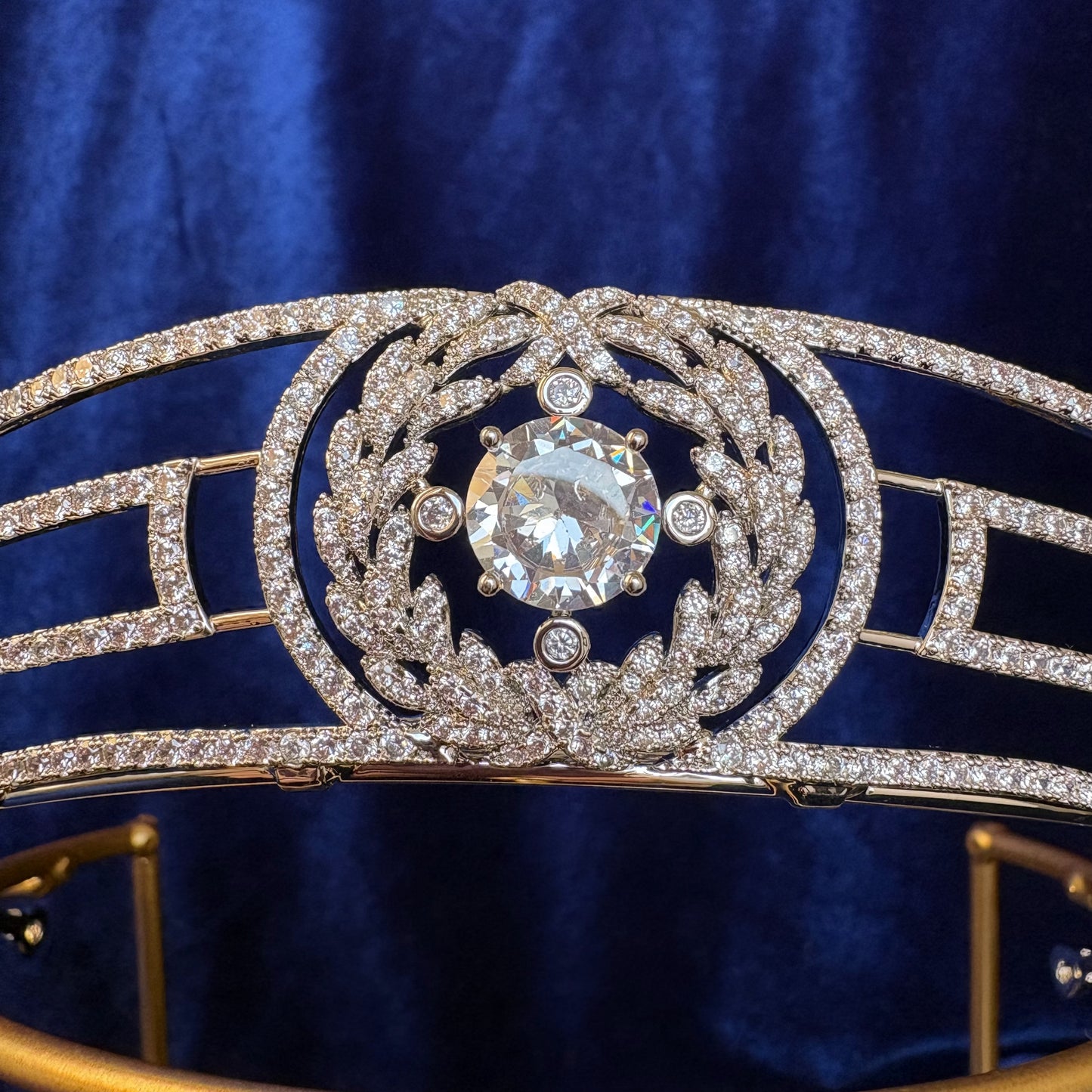
Princess Andrew's Meander Tiara
Fine Royal ReproductionsDiscover the understated elegance of the Princess Anne tiara collection with this exquisite replica. Officially known as Princess Andrew's Meander Tiara, this diamond bandeau is the Princess Royal's signature piece. Featuring a classic Greek Key tiara design with laurel wreaths and honeysuckle motifs, it is the perfect Princess Anne diamond tiara style for modern brides, famously worn by Zara Tindall on her wedding day.


Discover the understated elegance of the Princess Anne tiara collection with this exquisite replica. Officially known as Princess Andrew's Meander Tiara, this diamond bandeau is the Princess Royal's signature piece. Featuring a classic Greek Key tiara design with laurel wreaths and honeysuckle motifs, it is the perfect Princess Anne diamond tiara style for modern brides, famously worn by Zara Tindall on her wedding day.
Couldn't load pickup availability
Shipping
- Ships via UPS — tracking number sent to your email upon dispatch
- Worldwide shipping to all countries and destinations.
- Complimentary shipping on all orders within the United States
- Delivery warranty included on every single order
- 30-day returns on all unworn items from date of delivery
Ready for Your Special Night ?
How many days until your event ?Heirloom Quality
The Standard of Brilliance
- Tarnish-resistant coating. Restores to its original brilliance with just a jewelry polishing cloth.
- Crafted with a micropavé setting where every stone is integrated through heat and pressure, ensuring they stay securely in place forever.
- Guaranteed to match. The physical product is identical to the one featured in the photos and videos.
Materials
- Ultra-Reflective Premium AAAAA+ Cubic Zirconia
- High-Quality Alloy
- Genuine Platinum Plating
Measurements

- ⦁ Diameter : 14.5 cm - 5.7" ⦁ Height : 3 cm - 1.18" ⦁ Weight : 48 grams - 1.7 oz


— curate your ensemble —
Complete the Royal Look
İllüstrasyon ekleyin
Notre Héritage
Royal Timeline
As Worn by Queens & Princesses
Royal Wearers
Where Has This Royal Piece Been?
From coronation halls to state banquets, mapping the paths of royal treasures across the world.
Occasions Tap a pin
to explore
Discover More Treasures
EXPLORE THE FULL COLLECTIONFrom Past to Present
The Whole Story of The Original Royal Jewel
The Royal Fitting Room
See How It Crowns You
Our royal fitting room awaits. Upload your portrait and see the piece on you.
Virtual Try-On Experience

