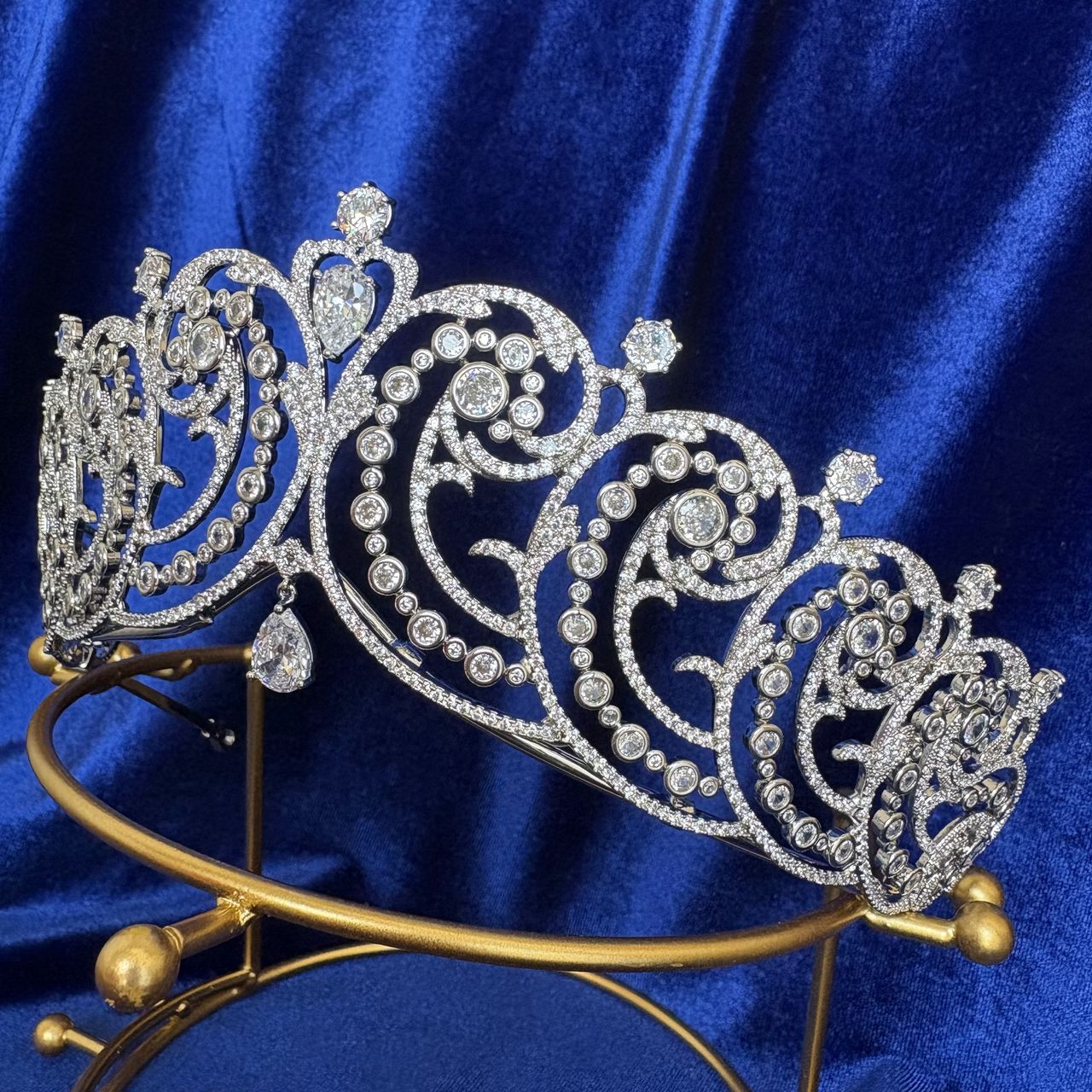
The Essex Tiara

Fine Royal Reproductions

While originally created for a New York heiress, the essex tiara achieved its place in the history books when it was famously worn by Clementine Churchill, wife of Sir Winston Churchill, for the 1953 coronation of Queen Elizabeth II. This striking diadem is a masterclass in architectural jewelry, utilizing negative space to create a regal yet ethereal presence. The design is anchored by a series of rigid scrolls that transition into magnificent pear-shaped diamond pinnacles, adding a sense of movement and vertical grace. Today, as the original piece resides in a museum collection, our faithful replica allows you to experience the same stately brilliance that defined one of the most iconic images of British public life, blending trans-Atlantic ambition with timeless aristocratic style.

Skip to product information
1 of 12

The Essex Tiara

Fine Royal Reproductions

The Essex Tiara

While originally created for a New York heiress, the essex tiara achieved its place in the history books when it was famously worn by Clementine Churchill, wife of Sir Winston Churchill, for the 1953 coronation of Queen Elizabeth II. This striking diadem is a masterclass in architectural jewelry, utilizing negative space to create a regal yet ethereal presence. The design is anchored by a series of rigid scrolls that transition into magnificent pear-shaped diamond pinnacles, adding a sense of movement and vertical grace. Today, as the original piece resides in a museum collection, our faithful replica allows you to experience the same stately brilliance that defined one of the most iconic images of British public life, blending trans-Atlantic ambition with timeless aristocratic style.

Regular price $220.00
Regular price Sale price $220.00
Sale Sold out
Shipping calculated at checkout.
Ships within 12-18 days days

Shipping

  • Ships via UPS — tracking number sent to your email upon dispatch
  • Worldwide shipping to all countries and destinations.
  • Complimentary shipping on all orders within the United States
  • Delivery warranty included on every single order
  • 30-day returns on all unworn items from date of delivery
✦   Artisan Made, On Time   ✦

Ready for Your Special Night ?

How many days until your event ?
Uncompromising Craftsmanship

Heirloom Quality

The Standard of Brilliance

  • Tarnish-resistant coating. Restores to its original brilliance with just a jewelry polishing cloth.
  • Crafted with a micropavé setting where every stone is integrated through heat and pressure, ensuring they stay securely in place forever.
  • Guaranteed to match. The physical product is identical to the one featured in the photos and videos.
Curated with the finest elements

Materials

  • Ultra-Reflective Premium AAAAA+ Cubic Zirconia
  • High-Quality Alloy
  • Genuine Platinum Plating
A Tailored Glimmer

Measurements

  • 6
View full details

Chosen By

Royal Wearers

Adele Grant, Countess of Essex
Clementine Churchill

Discover More Treasures

EXPLORE THE FULL COLLECTION

From Past to Present

The Whole Story of The Original Royal Jewel

The Essex Tiara

The Essex Tiara stands as a definitive artifact of the "Gilded Age," symbolizing the socio-economic merger between American industrial wealth and the British peerage. Unlike many diadems in the United Kingdom that originated as centuries-old ancestral legacies, this diamond structure was a specific commission intended to mark the entry of an American "Dollar Princess" into the highest tiers of English society.

The "Dollar Princess" Commission

The provenance of the tiara is tied to Adele Grant, a New York heiress and daughter of a railway magnate, who married George Capell, the 7th Earl of Essex, in 1893. Bringing a substantial dowry and a preference for contemporary luxury, the new Countess required a headpiece that reflected her status and the shifting aesthetic of the early 20th century.

The diadem was produced in 1902, a pivotal year coinciding with the coronation of King Edward VII. This period marked the transition from the somber Victorian era to the opulent Edwardian age. To attend the coronation at Westminster Abbey, the Countess engaged a premier Parisian jewelry house historically recognized as the "Jeweler of Kings" to execute a design that embraced the lighter, more transparent styles of the new century.

Architectural Composition and the Garland Style

Executed in platinum and encrusted with diamonds, the Essex Tiara is a masterwork of the Garland Style. The utilization of platinum was a technical innovation of the era; its strength allowed for a nearly invisible framework, creating the illusion that the gemstones were suspended in the air.

The architecture of the piece is characterized by:

  • Scrolling Palmettes: The design features a series of formal diamond scrolls that ascend into elegant, fern-like sprays.
  • Vertical Emphasis: The defining characteristic is the series of large, pear-shaped diamonds that surmount the upper scrolls, providing a rhythmic and regal height.
  • Negative Space: Unlike the dense, enclosed coronets of the 19th century, the Essex Tiara utilizes an openwork, lace-like structure. This "wall of light" wrap-around design ensured maximum visibility and brilliance during state ceremonies.

The Clementine Churchill Connection

Although the tiara belonged to the Essex family, its most documented historical moment involved a figure outside the direct lineage. During the 1953 coronation of Queen Elizabeth II, the diadem was loaned to Clementine Churchill, wife of the Prime Minister, Sir Winston Churchill.

As the spouse of the head of government, Clementine required an ornament of significant stature to complement her ceremonial robes. Photographs of her wearing the Essex Tiara became defining images of her public life, leading to a common misconception that the piece was a Churchill family heirloom. Its significant vertical presence perfectly aligned with the grandeur of the mid-century British state.

Current Status and Preservation

Following the death of the Countess of Essex, the diadem eventually left the family’s possession. It was subsequently reacquired by the heritage collection of the French jewelry house that originally manufactured it.

Today, the Essex Tiara functions as a museum-grade artifact rather than a piece of personal adornment. It is frequently featured in international exhibitions focused on the history of luxury and 20th-century design. It remains a flawless record of Edwardian craftsmanship and the trans-Atlantic alliances that shaped the modern British aristocracy.