
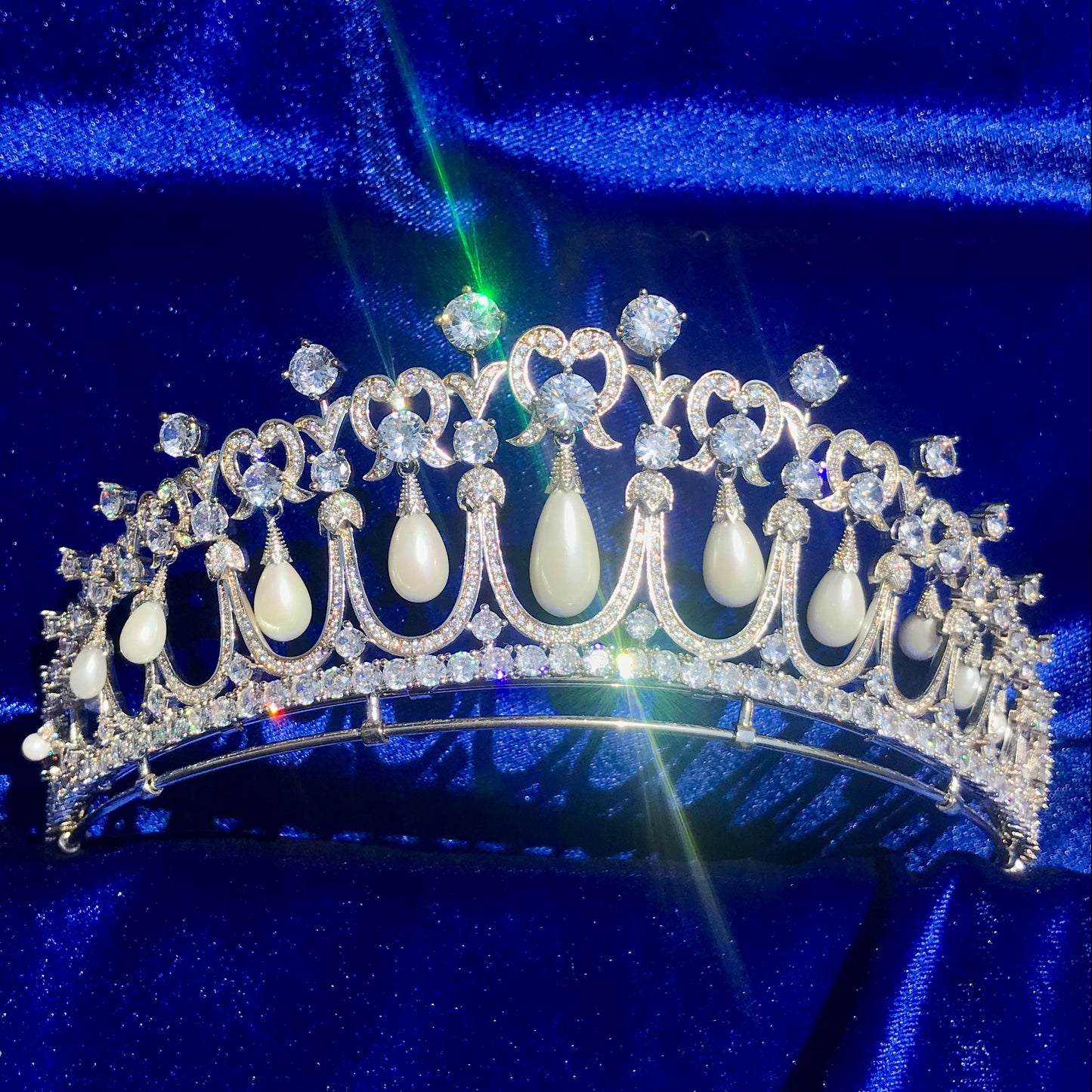
Queen Mary's Cambridge Lover's Knot Tiara (Princess Diana & Catherine)
Fine Royal ReproductionsFew jewels capture the imagination like the Lover’s Knot Tiara, a masterpiece of royal history that weaves together the legacies of the most iconic women in the House of Windsor. Originally commissioned by Queen Mary in 1913, this Gothic Revival treasure truly captured the world's heart when it became the signature piece of Lady Diana Spencer. As the Princess of Wales, Diana famously wore this diadem to countless state occasions, where the romantic diamond arches and nineteen swinging pearl drops became synonymous with her fairytale image. After years of resting in the royal vaults, the tiara has found a new chapter with Kate Middleton, now Princess Catherine, who wears it as a touching tribute to her late mother-in-law during diplomatic receptions. Our faithful replica embodies this rich heritage, perfectly recreating the mesmerizing movement of the pendant pearls and the intricate "lover's knot" motifs, offering you a chance to wear a symbol of timeless elegance shared by both Princess Diana and the future Queen.


Queen Mary's Cambridge Lover's Knot Tiara (Princess Diana & Catherine)
Fine Royal ReproductionsQueen Mary's Cambridge Lover's Knot Tiara (Princess Diana & Catherine)
- Customer review section are in the bottom of the page
Few jewels capture the imagination like the Lover’s Knot Tiara, a masterpiece of royal history that weaves together the legacies of the most iconic women in the House of Windsor. Originally commissioned by Queen Mary in 1913, this Gothic Revival treasure truly captured the world's heart when it became the signature piece of Lady Diana Spencer. As the Princess of Wales, Diana famously wore this diadem to countless state occasions, where the romantic diamond arches and nineteen swinging pearl drops became synonymous with her fairytale image. After years of resting in the royal vaults, the tiara has found a new chapter with Kate Middleton, now Princess Catherine, who wears it as a touching tribute to her late mother-in-law during diplomatic receptions. Our faithful replica embodies this rich heritage, perfectly recreating the mesmerizing movement of the pendant pearls and the intricate "lover's knot" motifs, offering you a chance to wear a symbol of timeless elegance shared by both Princess Diana and the future Queen.
Couldn't load pickup availability
Heirloom Quality
The Standard of Brilliance
- Tarnish-resistant coating. Restores to its original brilliance with just a jewelry polishing cloth.
- Crafted with a micropavé setting where every stone is integrated through heat and pressure, ensuring they stay securely in place forever.
- Guaranteed to match. The physical product is identical to the one featured in the photos and videos.
Materials
- Ultra-Reflective Premium AAAAA+ Cubic Zirconia
- High-Quality Alloy
- Genuine Platinum Plating
- Shell Pearls ~ Shell pearls are made from pearl oysters; the inner part of pearl oysters are ground to a fine powder and reshaped, and they are more durable than freshwater pearls.
Measurements

- Diameter : 15 cm - 5.9 , Height : 5.8 cm - 2.3" , and Weight : 105 grams - 3.7 oz
Shipping
- Ships via UPS — tracking number sent to your email upon dispatch
- Worldwide shipping to all countries and destinations.
- Complimentary shipping on all orders within the United States
- Delivery warranty included on every single order
- 30-day returns on all unworn items from date of delivery


— curate your ensemble —
Complete the Royal Look
İllüstrasyon ekleyin
Notre Héritage
Royal Timeline
As Worn by Queens & Princesses
Royal Wearers
Where Has This Royal Piece Been?
From coronation halls to state banquets, mapping the paths of royal treasures across the world.
Occasions Tap a pin
to explore
From Past to Present
The Whole Story of The Original Royal Jewel
The Royal Fitting Room
See How It Crowns You
Our royal fitting room awaits. Upload your portrait and see the piece on you.
Virtual Try-On Experience

