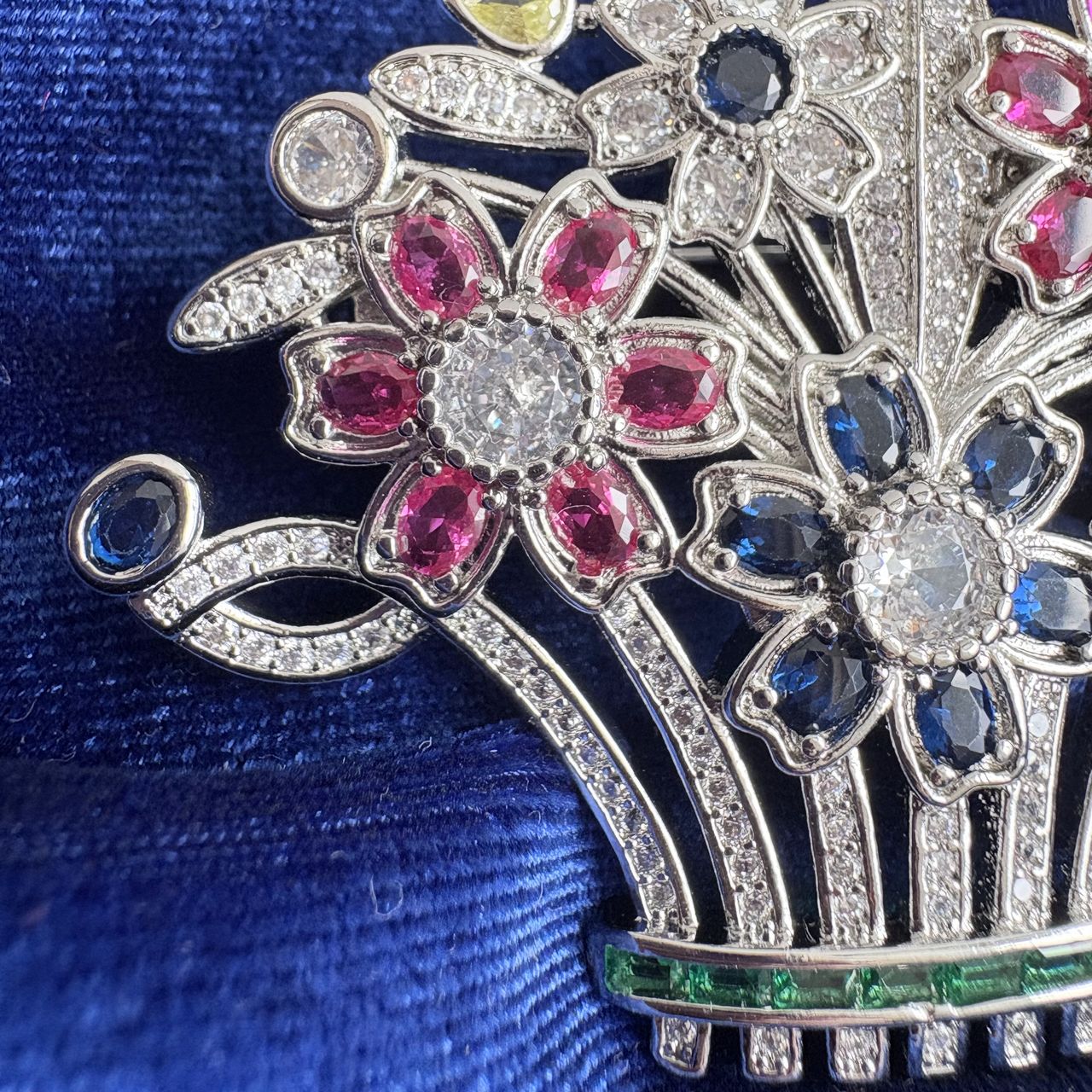
Queen Elizabeth II Flower Basket Brooch

Fine Royal Reproductions

Celebrate the bond of family with this Queen Elizabeth Flower Basket Brooch replica. Originally a gift from her parents to mark the birth of Prince Charles in 1948, the Queen famously wore this piece in the first portraits of her son. She revived its sentimental legacy in 2013 for Prince George's christening, making it a timeless symbol of maternal love and royal succession.

Skip to product information
1 of 8

Queen Elizabeth II Flower Basket Brooch

Fine Royal Reproductions

Queen Elizabeth II Flower Basket Brooch

Celebrate the bond of family with this Queen Elizabeth Flower Basket Brooch replica. Originally a gift from her parents to mark the birth of Prince Charles in 1948, the Queen famously wore this piece in the first portraits of her son. She revived its sentimental legacy in 2013 for Prince George's christening, making it a timeless symbol of maternal love and royal succession.

Regular price $130.00
Regular price Sale price $130.00
Sale Sold out
Shipping calculated at checkout.

Shipping

  • Ships via UPS — tracking number sent to your email upon dispatch
  • Worldwide shipping to all countries and destinations.
  • Complimentary shipping on all orders within the United States
  • Delivery warranty included on every single order
  • 30-day returns on all unworn items from date of delivery
Uncompromising Craftsmanship

Heirloom Quality

The Standard of Brilliance

  • Tarnish-resistant coating. Restores to its original brilliance with just a jewelry polishing cloth.
  • Crafted with a micropavé setting where every stone is integrated through heat and pressure, ensuring they stay securely in place forever.
  • Guaranteed to match. The physical product is identical to the one featured in the photos and videos.
Curated with the finest elements

Materials

    A Tailored Glimmer

    Measurements

    • 3
    View full details

    Notre Héritage

    Royal Timeline

    1948
    Princess Elizabeth receives the Flower Basket Brooch from her parents to commemorate the birth of Prince Charles, symbolizing the continuity of the Windsor line.
    1948 (Dec)
    he brooch makes its first public appearance in official portraits of the infant Prince Charles.
    2013
    Queen Elizabeth II wears the brooch for Prince George’s christening and Christmas Broadcast, creating a generational link between heirs.
    2022–2025
    Following the Queen’s passing, the brooch remains in the royal rotation as a symbol of maternal legacy and dynastic continuity.

    Chosen By

    Royal Wearers

    Queen Elizabeth II

    Discover More Treasures

    EXPLORE THE FULL COLLECTION

    From Past to Present

    The Whole Story of The Original Royal Jewel

    Queen Elizabeth II’s Iconic Flower Basket Brooch

    Within the extensive collection of the British sovereign, the Flower Basket Brooch is distinguished by its deep personal resonance rather than its material scale. While the royal archives contain stones of immense carat weight, this botanical ornament represents a narrative of maternal succession and the longitudinal stability of the House of Windsor. It functions as a historical anchor, visually connecting the mid-20th-century birth of the current King to the 21st-century arrival of his successors.

    A Symbolic Gift of Succession

    The provenance of the brooch is tied to the immediate post-war period. In November 1948, following the birth of her first child, Prince Charles (now King Charles III), the then Princess Elizabeth received this ornament from her parents, King George VI and Queen Elizabeth. The gift was intended to commemorate the securing of the dynastic line, marking her transition into motherhood and her role as the future matriarch of the monarchy.

    The "Giardinetti" Aesthetic and Composition

    Architecturally, the piece is a refined example of the giardinetti (little garden) style, a genre of jewelry characterized by miniature floral arrangements that achieved popularity in the 18th century and saw a resurgence in the 1940s. In contrast to the monochromatic diamond ornaments typically utilized for formal state ceremonies, this brooch is polychromatic and naturalistic.

    The design comprises:

    • The Basket: A woven trellis structure rendered in white gold and encrusted with diamonds.
    • The Bouquet: An arrangement of gemstone blossoms, including rubies and sapphires, providing a vibrant palette of red and blue.
    • The Foliage: Stems and leaves set with emeralds to provide a green, organic contrast.
    • Versatility: Its compact scale and multicolored gems made it a primary choice for daytime diplomatic duties, as it harmonized with the solid-colored wardrobes favored by the late Queen.

    A Visual Link Between Generations

    The historical significance of the Flower Basket Brooch is established through its documented use during pivotal family milestones. Its initial public appearance occurred in December 1948 in the first official portraits of the infant Prince Charles. Pinned to the Princess’s lapel as she held her son, the jewel became a symbol of the bond between the sovereign-in-waiting and her heir.

    Sixty-five years later, the Queen purposefully utilized this symbolism to highlight the continuity of the crown. For the 2013 christening of her great-grandson, Prince George the direct heir in the third generation she selected the same brooch. This "visual echo" created a direct link between the infancy of two future Kings, threading together the past and future of the monarchy through a single artifact. She further reinforced this connection by wearing the brooch during her 2013 Christmas Broadcast, positioned beside a photograph of the christening party.

    Contemporary Significance

    Following the passing of Queen Elizabeth II, the brooch remains a testament to her personal history and the endurance of the royal lineage. It is categorized not merely as a decorative accessory but as a functional record of the Windsor family tree. As the piece moves into the rotation of the next generation, it is expected to be reserved for occasions that emphasize familial legacy and maternal affection, maintaining its role as a silent witness to the evolution of the British monarchy.