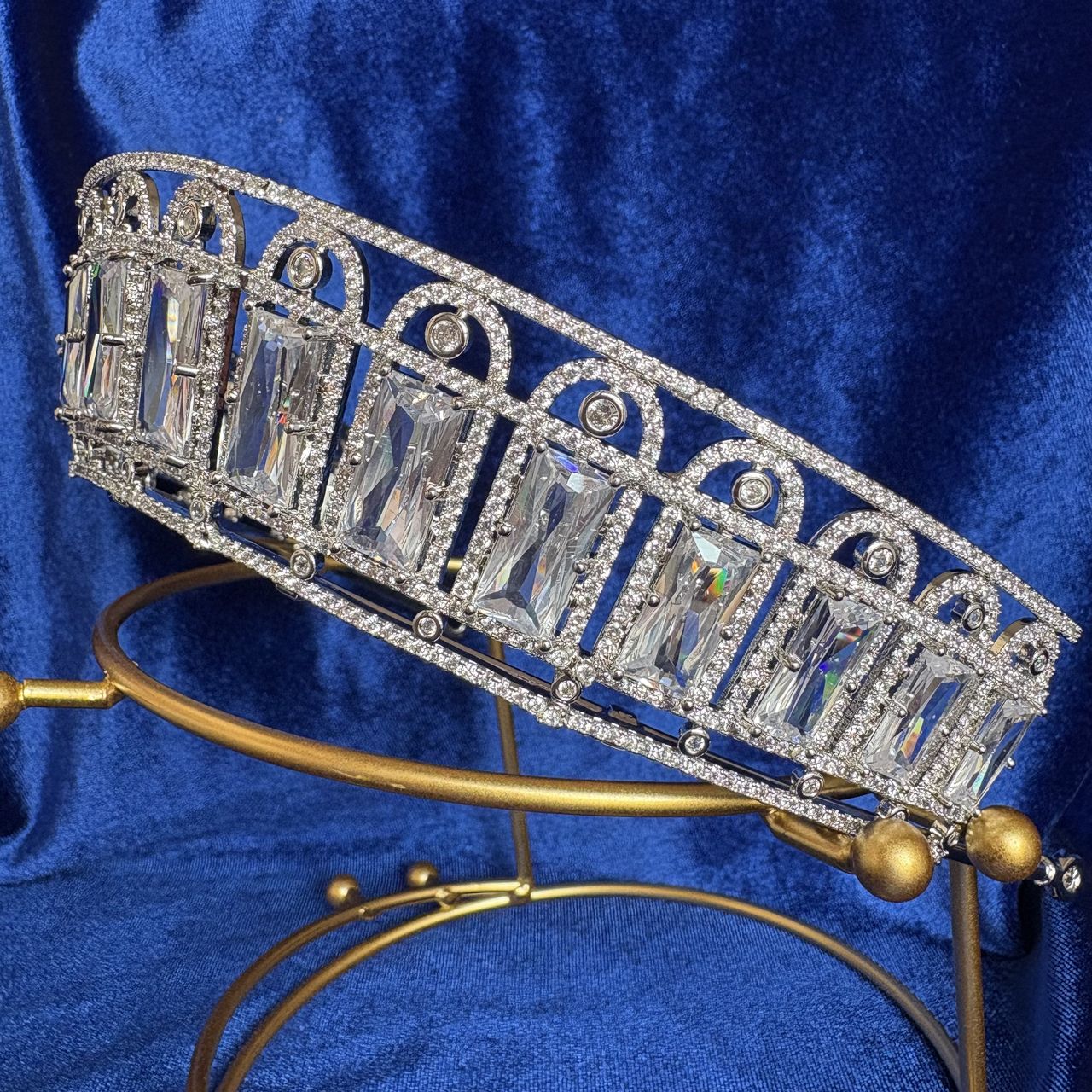
The Russian Aquamarine Kokoshnik Tiara Replica

Fine Royal Reproductions

Renowned for its bold nationalist revival style, the Russian Aquamarine Kokoshnik Tiara represents the pinnacle of Imperial craftsmanship. The halo-like structure, inspired by traditional peasant headdresses, was transformed into a majestic "wall of diamonds" and sea-blue gems to meet the strict protocols of the Russian court. Our faithful Russian tiara replica honors this technical mastery, featuring graduated aquamarine-style stones that mirror the clarity of a frozen lake. Whether you are captivated by the mystery of the tiaras of Russia or the specific allure of Romanov kokoshnik designs, this diadem stands as a glittering testament to a period of unmatched luxury and the artistic soul of the Russian Empire.

Skip to product information
1 of 8

The Russian Aquamarine Kokoshnik Tiara Replica

Fine Royal Reproductions

The Russian Aquamarine Kokoshnik Tiara Replica

Renowned for its bold nationalist revival style, the Russian Aquamarine Kokoshnik Tiara represents the pinnacle of Imperial craftsmanship. The halo-like structure, inspired by traditional peasant headdresses, was transformed into a majestic "wall of diamonds" and sea-blue gems to meet the strict protocols of the Russian court. Our faithful Russian tiara replica honors this technical mastery, featuring graduated aquamarine-style stones that mirror the clarity of a frozen lake. Whether you are captivated by the mystery of the tiaras of Russia or the specific allure of Romanov kokoshnik designs, this diadem stands as a glittering testament to a period of unmatched luxury and the artistic soul of the Russian Empire.

Regular price $220.00
Regular price Sale price $220.00
Sale Sold out
Shipping calculated at checkout.
Ships within 12-18 days days

Shipping

  • Ships via UPS — tracking number sent to your email upon dispatch
  • Worldwide shipping to all countries and destinations.
  • Complimentary shipping on all orders within the United States
  • Delivery warranty included on every single order
  • 30-day returns on all unworn items from date of delivery
✦   Artisan Made, On Time   ✦

Ready for Your Special Night ?

How many days until your event ?
Uncompromising Craftsmanship

Heirloom Quality

The Standard of Brilliance

  • Tarnish-resistant coating. Restores to its original brilliance with just a jewelry polishing cloth.
  • Crafted with a micropavé setting where every stone is integrated through heat and pressure, ensuring they stay securely in place forever.
  • Guaranteed to match. The physical product is identical to the one featured in the photos and videos.
Curated with the finest elements

Materials

  • Ultra-Reflective Premium AAAAA+ Cubic Zirconia
  • High-Quality Alloy
  • Genuine Platinum Plating
A Tailored Glimmer

Measurements

  • ⦁ Diameter : 14.5 cm - 5.7" ⦁ Height : 4.5 cm - 1.77" ⦁ Weight : 130 grams - 4.58 oz
View full details

— curate your ensemble —

Complete the Royal Look

İllüstrasyon ekleyin

Notre Héritage

Royal Timeline

1894
Empress Alexandra Feodorovna receives and begins wearing the Aquamarine Kokoshnik Tiara at court, showcasing its platinum lattice and Siberian aquamarines.
1917
Following the Russian Revolution, the Romanov treasury is confiscated; the tiara is documented but removed from imperial use.
1922
The tiara is included in the Fersman Inventory, a detailed photographic and descriptive record of Romanov assets for potential liquidation.
1927
Auction in London lists the tiara among Romanov jewels sold to Western collectors; after this sale, the tiara disappears from public record.

As Worn by Queens & Princesses

Royal Wearers

✦ ✦ ✦ Empress Alexandra Feodorovna
THE ROYAL SPARKLE ATLAS

Where Has This Royal Piece Been?

From coronation halls to state banquets, mapping the paths of royal treasures across the world.

6 Royal
Occasions
Tap a pin
to explore

Discover More Treasures

EXPLORE THE FULL COLLECTION

From Past to Present

The Whole Story of The Original Royal Jewel

The Russian Aquamarine Kokoshnik Tiara

The Russian Aquamarine Kokoshnik Tiara remains one of the most evocative and significant "lost" artifacts of the Romanov dynasty. While the Imperial court was often defined by the overwhelming use of colorless diamonds, this diadem was a celebration of chromatic intensity, utilizing the natural mineral wealth of the Russian interior to produce a work of "icy" elegance. Historically, the piece is linked to the last Tsarina, Empress Alexandra Feodorovna, whose aesthetic preferences often leaned toward jewels that balanced traditional majesty with refined artistic detail.

Nationalist Revival and Design

The architecture of the tiara was firmly rooted in the 19th-century nationalist revival that influenced the Russian arts. The kokoshnik silhouette, a broad, arched form derived from the traditional headgear of Russian peasant women, had become the mandated style for official court appearances.

This specific diadem interpreted the traditional form through a sophisticated lens:

  • The Framework: A delicate yet structurally sound lattice of platinum and diamonds.
  • The Gemstones: The tiara was characterized by its use of substantial Siberian aquamarines. These stones were highly valued for their saturated blue hue and exceptional clarity, frequently likened to the color of frozen water.
  • The Composition: Large rectangular and cushion-cut aquamarines were positioned vertically, graduating in scale toward the central apex. This created a rhythmic, towering wall of blue light that provided a striking visual counterpoint to the velvet and gold embroidery of the Imperial Russian court uniforms.

Craftsmanship and the Imperial Suite

The diadem is generally attributed to one of the premier court jewelry workshops in St. Petersburg, noted for their pioneering work in platinum fabrication. The tiara was not a standalone item but the centerpiece of a comprehensive parure, which included a coordinating necklace and additional ornaments. This suite allowed the Empress to present a cohesive aesthetic of "frozen splendor" during the grand balls at the Winter Palace.

The Revolution and the Fersman Inventory

The narrative of the Aquamarine Kokoshnik is inseparable from the political collapse of 1917. Following the revolution, the Bolshevik government confiscated the Romanov treasury. The tiara was meticulously documented in the Fersman Inventory of 1922, a comprehensive photographic and descriptive record intended to facilitate the valuation and potential liquidation of the imperial assets.

Unlike the primary state regalia such as the Great Imperial Crown, which remained in Moscow the aquamarine suite was identified as a non-essential asset suitable for international sale to generate foreign currency for the Soviet state.

Disappearance and Current Status

The tiara is believed to have been featured in a historic 1927 auction in London, where a significant portion of the Romanov private jewels was sold to Western collectors. Following this sale, the ornament vanished into the anonymity of private hands.

While other European houses most notably the Swedish Royal Family possess high-quality aquamarine kokoshniks, the original Russian version remains unaccounted for. It may exist in an undisclosed private archive, or it may have been dismantled for its constituent stones. Today, the Russian Aquamarine Kokoshnik Tiara survives primarily in the grainy archival photographs of the 1922 inventory, serving as a material ghost of the vanished Romanov era.

The Royal Fitting Room

See How It Crowns You

Our royal fitting room awaits. Upload your portrait and see the piece on you.

Virtual Try-On Experience